
24-Hour and Live-In Care at Home
There comes a point where a few hours a day is not enough. Someone needs to be there at two in the morning when your father tries to get up on his own. We provide genuine around-the-clock care in your parent's own home; caregivers working in shifts so somebody is awake all night, or a live-in caregiver who stays in the house. Most families who call us are choosing between this and a facility.
Call (833) 607-7272 · Schedule a free in-home visit
Do You Need Our Help ?
Feel free to contact us now
Estimate Form
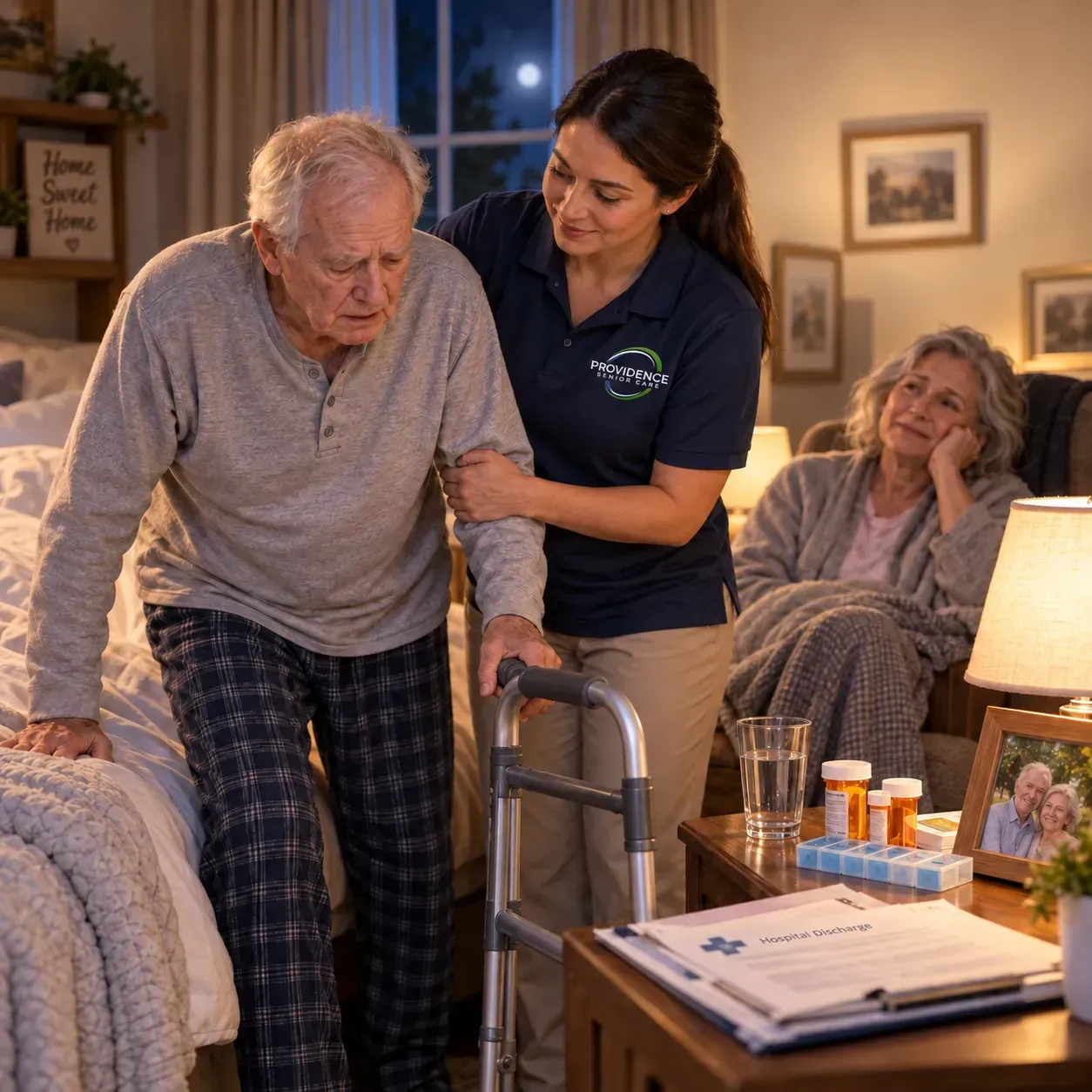
When Families Call Us About 24-Hour Care
- A fall has happened, or nearly happened. Once someone goes down once, the family stops sleeping.
- Dementia has reached the night. Wandering, sundowning, getting up and dressed at three in the morning.
- A hospital discharge has come home with instructions nobody in the family can safely manage alone.
- One person has been doing it all and cannot keep going. Usually a spouse, usually exhausted, usually the last to admit it.
- A nursing home is the other option on the table and nobody in the family wants it.
- The end of life is near and the family wants it to happen at home.
If you recognize your family in that list, call. The first conversation costs nothing and there is no obligation.
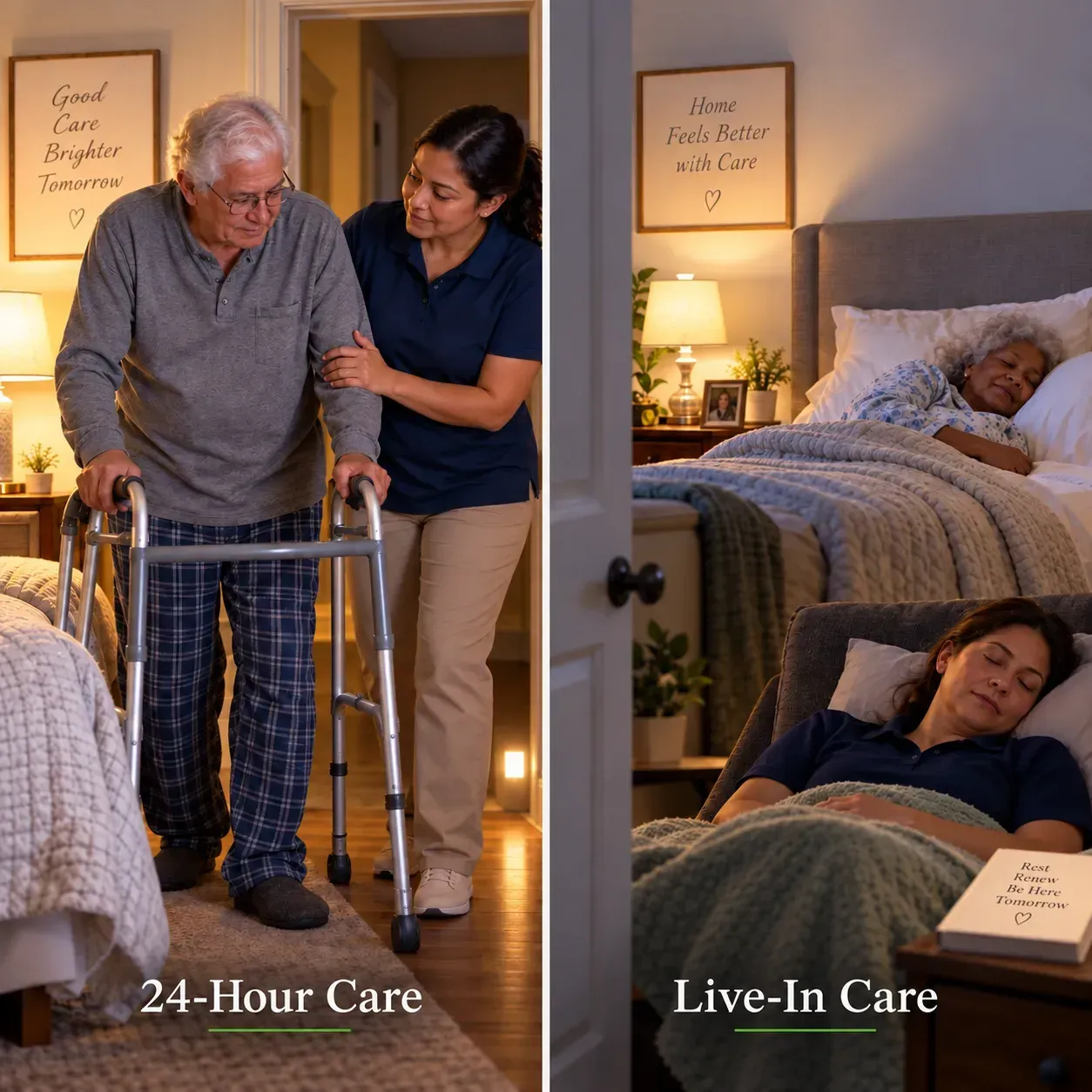
24-Hour Care and Live-In Care Are Not the Same Thing
Most agencies use the phrases interchangeably. They should not, because the difference matters at three in the morning.
24-hour care means caregivers work in shifts — typically two or three a day — and the caregiver on duty stays awake the entire time. Nobody sleeps on the job. If your loved one gets up at night, someone is already awake to help.
Live-in care means one caregiver stays in the home, is there through the night, and sleeps there. It suits someone who is largely settled overnight but should not be alone in the house.
We offer both. Where there is night-time wandering, a real fall risk, or someone who needs help getting to the bathroom after dark, we will recommend 24-hour shift care — and we will say so plainly even when it is not the cheaper answer. Every family's needs are different, and the point of the free in-home visit is to work out which one is honestly right for yours.

What Around-the-Clock Care Looks Like With Providence Senior Care
- A written care plan. Before the first shift we sit down in the home and write down the routine, the medications, the mobility needs, the night-time habits, what your loved one enjoys, and what to do if something changes. Every caregiver works from that plan, not from guesswork.
- A nurse assessment. A nurse reviews the medical picture before care starts, so the plan is built on more than a conversation. Not every agency does this.
- The same caregivers whenever we can. Consistency is our goal, because it is what builds trust and comfort — for your loved one and for you. With round-the-clock care it is a small team rather than one person, and we keep that team steady. When someone has to change, you hear it from us in advance, and whoever comes has already been briefed on the care plan.
- Trained, background-checked caregivers. Every caregiver is screened, background checked, and trained before they enter a home.
- A handover at every shift change. The caregiver going off duty briefs the one coming on — how the night went, what was eaten, what was different. Nothing gets lost between shifts.
- Backup coverage, so the schedule holds. Caregivers get sick and have appointments like everyone else. When that happens we cover the shift rather than cancel it.
- Real help while they are there. Personal care, bathing and dressing, meals, medication reminders, mobility and transfers, light housekeeping, laundry, and company.
Staying Home Instead of Moving to a Facility
For most families this is the real decision, and it is usually made in a hurry after something goes wrong. It is worth slowing down long enough to look at it properly.
Home means your parent keeps their own bed, their own bathroom, their own kitchen, and their own routine. It means one-to-one attention rather than shared staff. It means you visit as family rather than as a guest during visiting hours. For someone with dementia in particular, staying in familiar surroundings often
matters more than anything else on the list.
Around-the-clock care at home is not always more expensive than the alternative. We will walk you through what it would actually cost for your situation, honestly, before you commit to anything.
Paying for Care
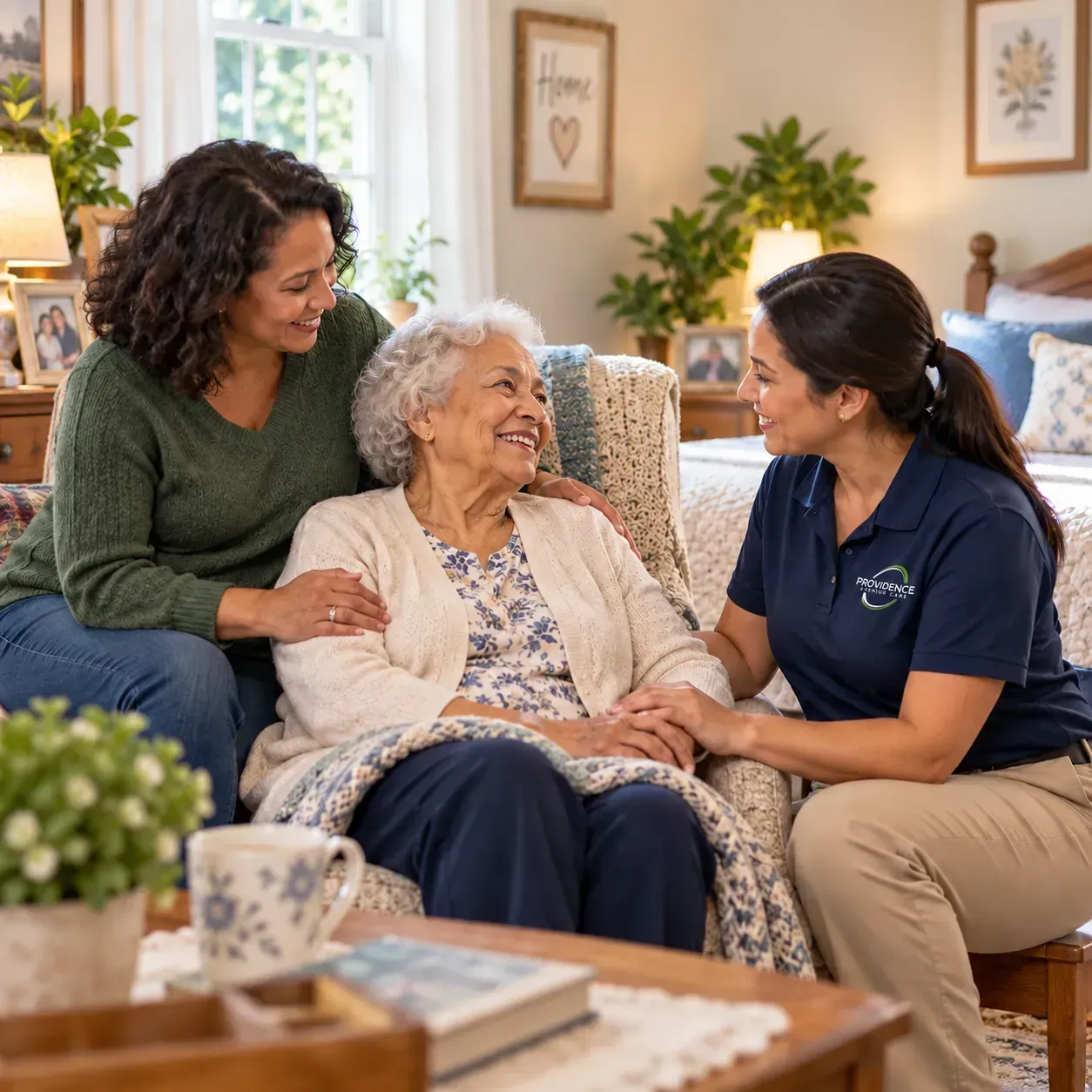
Providence Senior Care bills private pay, North Carolina Medicaid, and VA Aid and Attendance for veterans and surviving spouses. Many families do not realize their parent qualifies for VA benefits that help cover in-home care. If you are not sure, ask us — we will tell you plainly whether it is worth pursuing.
How to Get Started
- Call (833) 607-7272 or send us a message. Tell us what is going on.
- We come to the home for a free consultation. We meet your loved one, look at the house, and talk through what would actually help — including whether 24-hour care is really what you need yet.
- A nurse assessment. A nurse reviews the medical picture so the care plan is built on more than a conversation.
- The first shift. Most families go from that first phone call to a caregiver in the home within about five days. You will know the plan, the caregivers, and the cost before anything begins.
Call (833) 607-7272 · Schedule a free in-home visit
Frequently Asked Questions About 24-Hour and Live-In Care
What is the difference between 24-hour care and live-in care?
With 24-hour care, caregivers work in shifts and the caregiver on duty stays awake the whole time. With live-in care, one caregiver stays in the home and sleeps there. We offer both. If your loved one needs help during the night — getting up, wandering, a fall risk — 24-hour shift care is usually the safer fit, and we will say so.
Does someone really stay awake all night?
With 24-hour shift care, yes. That is the whole point of staffing it in shifts.
How quickly can care start?
Usually within about five days. That covers the free consultation, the nurse assessment, and the first shift. If something urgent is happening, call and tell us — we will be straight with you about what we can do and when.
Can you cover the first weeks after a hospital discharge?
Yes, and it is one of the most common reasons families call. Call as soon as you know a discharge is coming rather than after — it gives us time to get the plan and the caregivers in place.
How much does 24-hour care cost?
It depends on the level of care and whether shift care or live-in care fits, so we do not publish a rate that would not apply to you. Call (833) 607-7272 and we will talk it through, and you will have a clear number after the free in-home visit — not an estimate over the phone that changes later. We also bill North Carolina Medicaid and VA Aid and Attendance, which cover more families than expect it.
Will it be the same caregivers every time?
That is our goal and it is what we build the schedule around. Round-the-clock care needs a small team rather than one person, so you will meet a few caregivers — but we keep that team as steady as we can, they all work from the same written care plan, and you hear from us in advance when something has to change.
Is 24-hour care only for people with dementia?
No. Fall risk, recovery after a hospital stay, advanced illness, and end-of-life care at home are all common reasons. Dementia is simply the most frequent one.
What if we only need overnight cover, not the full day?
That is a normal place to start and often the right one. Tell us what the nights look like and we will build the schedule around that.
Does Medicaid or the VA pay for 24-hour care?
We bill North Carolina Medicaid and VA Aid and Attendance. Whether a specific person qualifies depends on their situation, and we are glad to help you find out.
Are your caregivers background checked?
Yes. Every caregiver is screened, background checked, and trained before working in a home.
What areas do you cover?
Thomasville, Lexington, High Point, and the surrounding Davidson County and Guilford County communities.